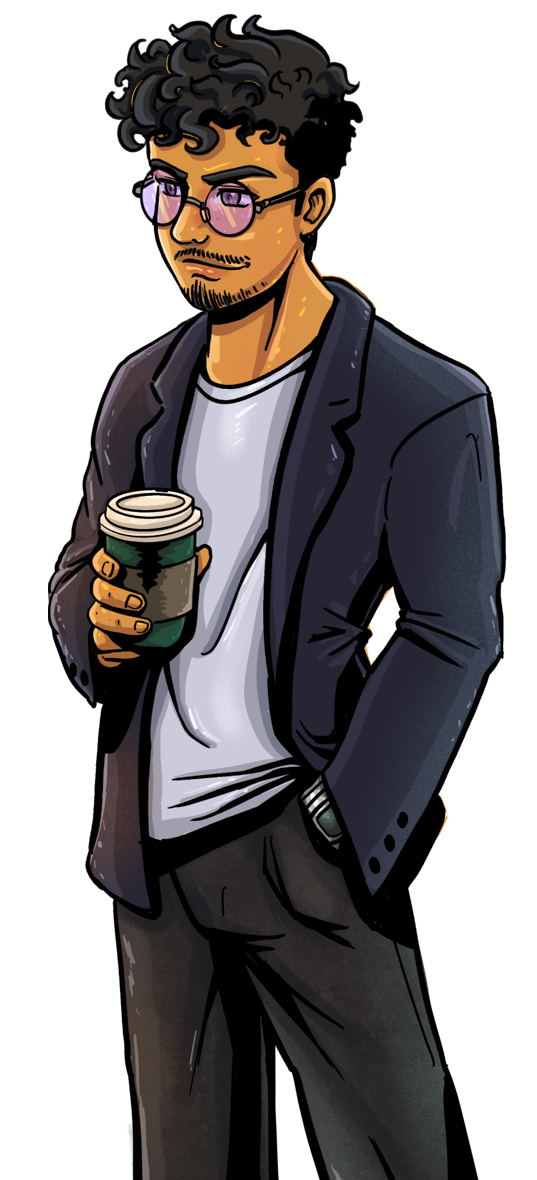
I'm Danny-O! The sole developer of "Phaze Shift", a high-fidelity 2D action platformer. I am a multi-disciplinary Technical Artist, Gameplay Programmer, and UI Engineer seeking remote opportunities where I can leverage my full-stack development expertise and C# proficiency. I am completely bilingual (English/Spanish) and can enable seamless communication across diverse teams.
A two-hour playable demo is available via private link/download code and has been published to Steam (currently set to private until the marketing campaign begins).
Below is my development process, showcasing everything I've taught myself. Though I started as an artist, I've developed strong programming and technical skills to bridge art and engineering. From the beginning, I knew Phaze Shift would feature hand-drawn art with a 2.5D aesthetic. I wanted to 3D model the characters while maintaining a 2D look. Here's how I achieved that:
Character Development Pipeline
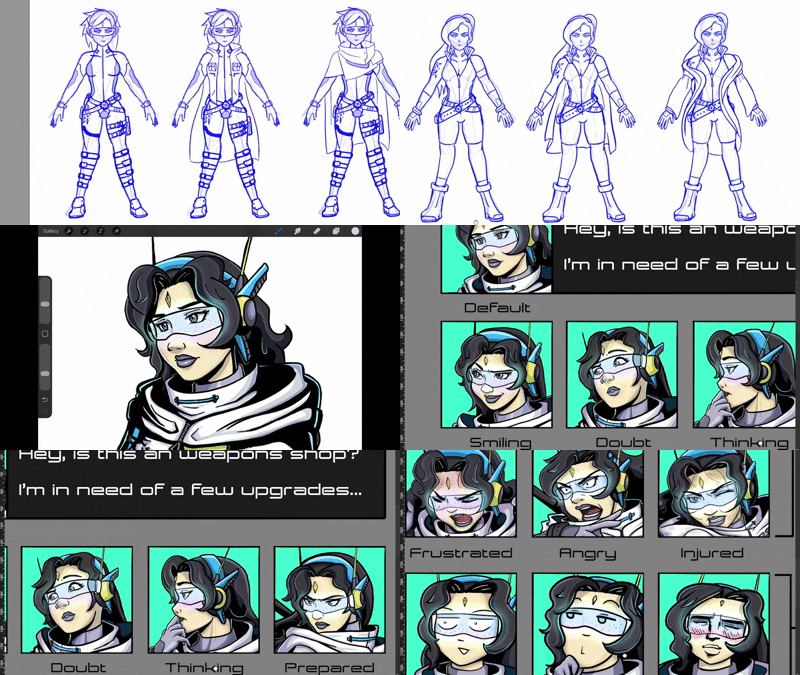
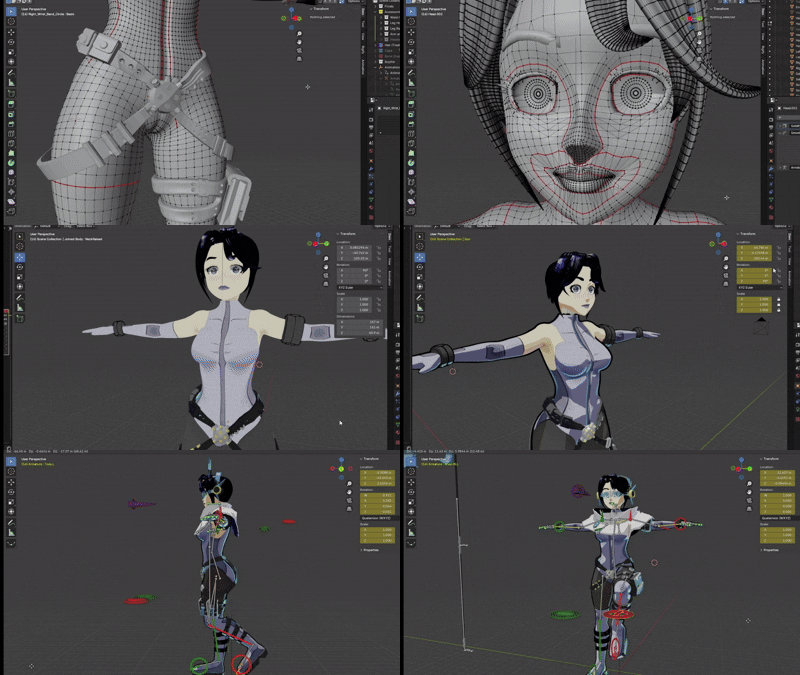
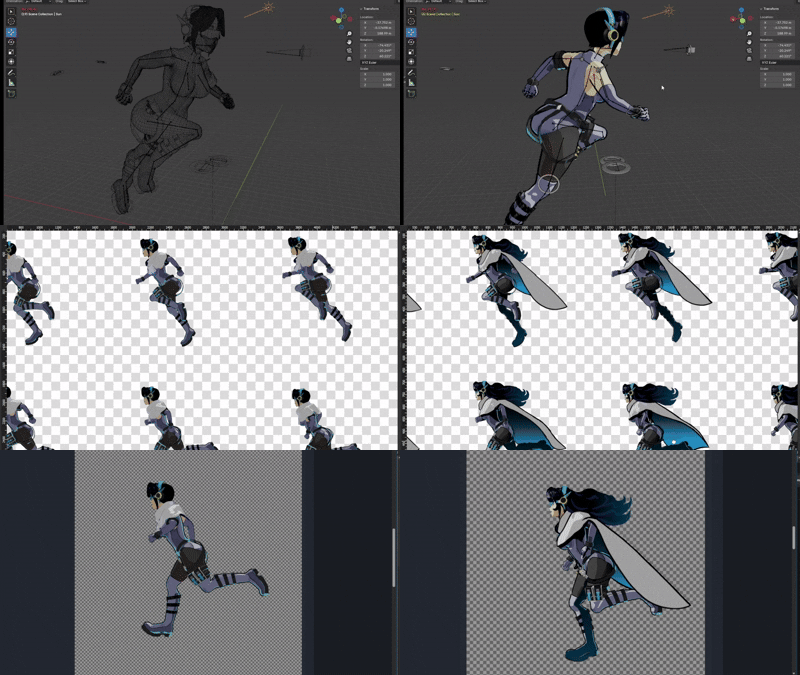
From concept, I bring each character to life with high-quality portrait art, then move into Blender to sculpt, retopologize, and weight paint, ensuring the face has clean topology for animation. I use shape keys and inverse kinematics rigging to animate characters properly.
To create the illusion of 2D, I developed a custom shader combined with vertex painting to give the models a hand-drawn appearance.
Animation + Technical Art
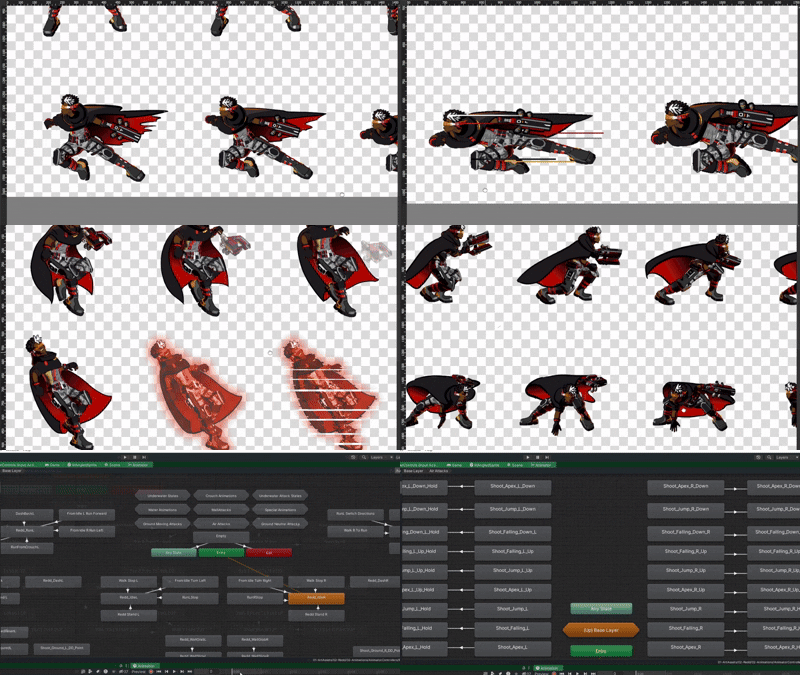
I animated both main characters without their hair and capes, rendering each frame into sprite sheets. I then drew over these sprite sheets by hand, adding hair, capes, and traditional animation techniques like speed lines and squash-and-stretch to enhance the hand-drawn aesthetic.
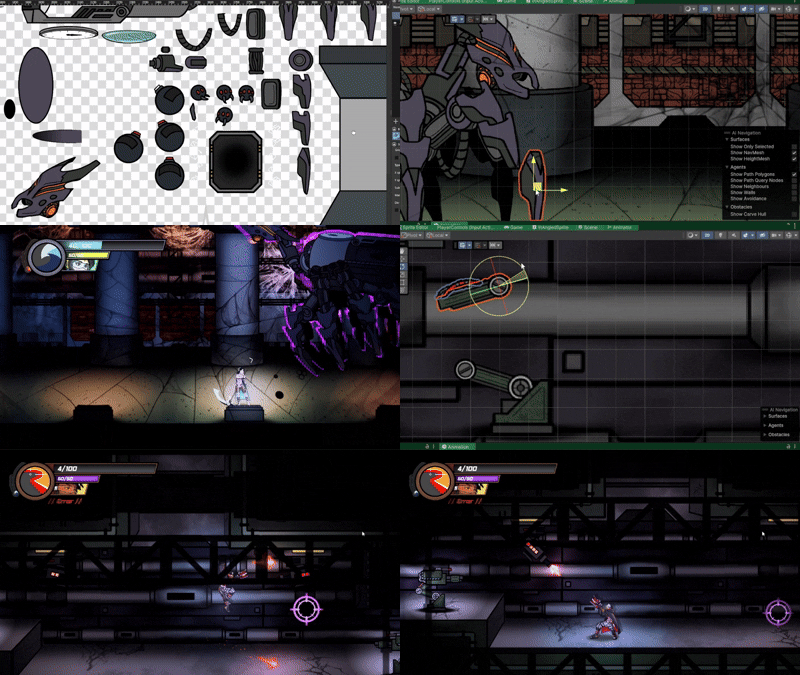
After importing into Unity, I animate characters "on twos" for fluid movements like running and walking, and I use anticipation, smear and impact frames for snappier action animations. There are over 200+ unique animations per character (400+ total), and at least 1,500+ individual sprites for each.
I built a character controller in C# with tunable variables for move speed, dash speed, coyote time, and more, ensuring controls feel responsive while accounting for player input errors. I invested significant iteration time on "movement feel" to ensure players enjoy simply moving the character around the world.
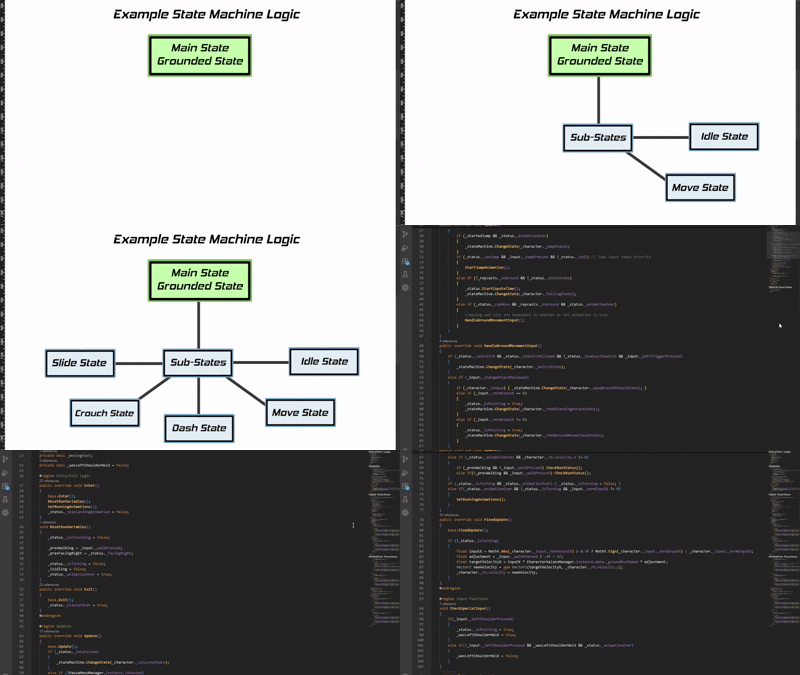
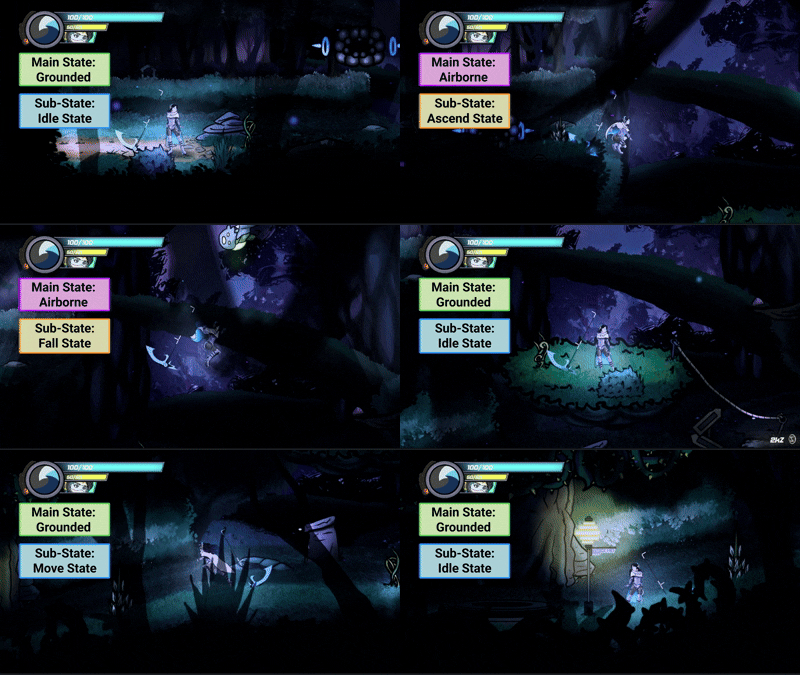
I created a complex, modular state machine architecture to handle character behaviors, with 30+ substates (falling, jumping, sliding, injured, etc. and more on the way) and clean transition logic. This architecture ensures scalable, maintainable logic with robust transition handling, and was successfully adapted for smaller-scale state machines managing unique enemy and boss behaviors.
Level Design + Environment
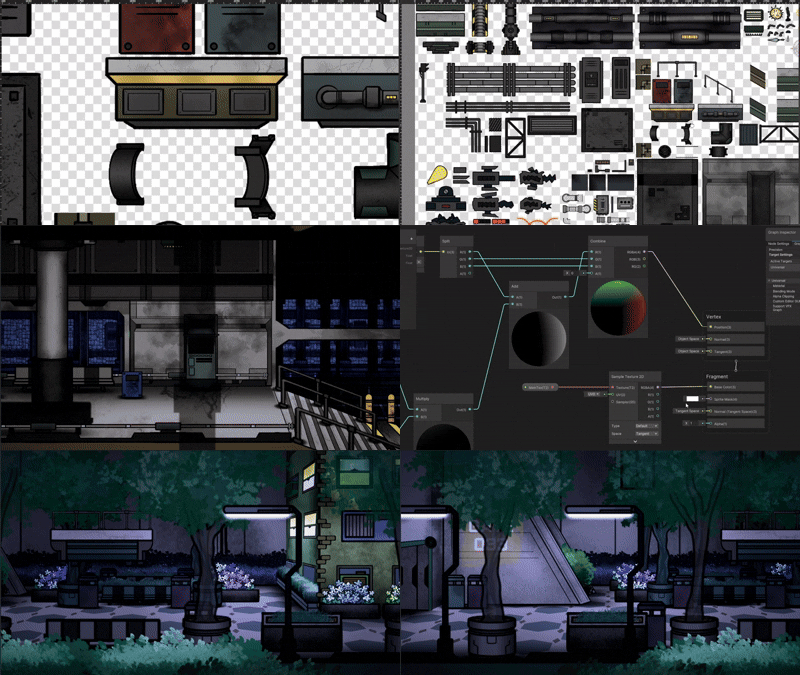
Once movement and character-switching mechanics felt right, I designed the game world using a library of 500+ modular environment assets across 4 distinct locales (with more in development). These pieces work like building blocks, allowing flexible level construction.
I developed custom shader graphs for environmental effects like foliage sway and charge blast distortions. All enemies and environments are hand-drawn. I incorporated light 3D elements alongside 2D sprites with parallax effects to create a unique 2.5d “diorama” type look for the environment.
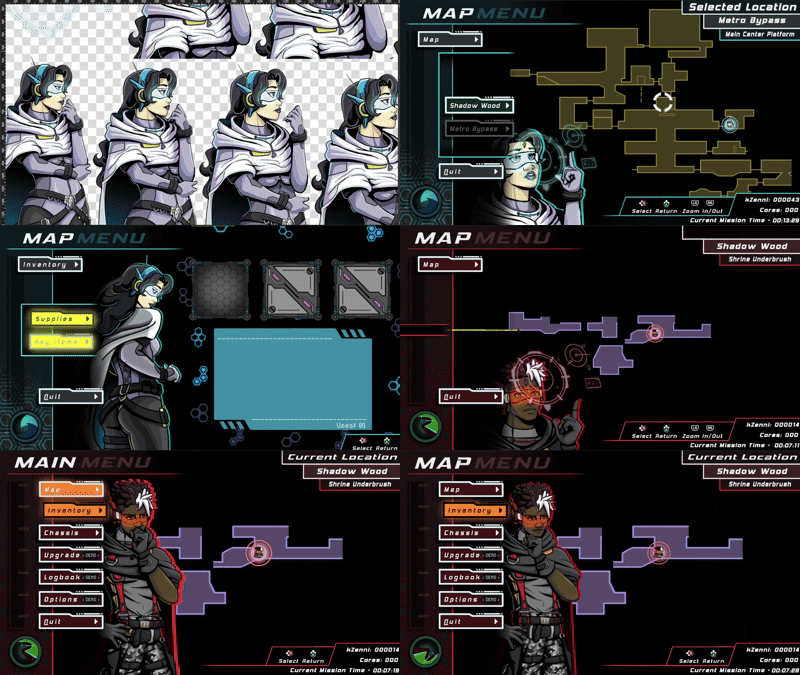
I designed a clean, readable UI that draws immediate attention to the map and active character. The pause menu features distinct color themes for each character, with frame-by-frame animated character reactions that respond to the player's menu selections, adding personality and polish to the interface.
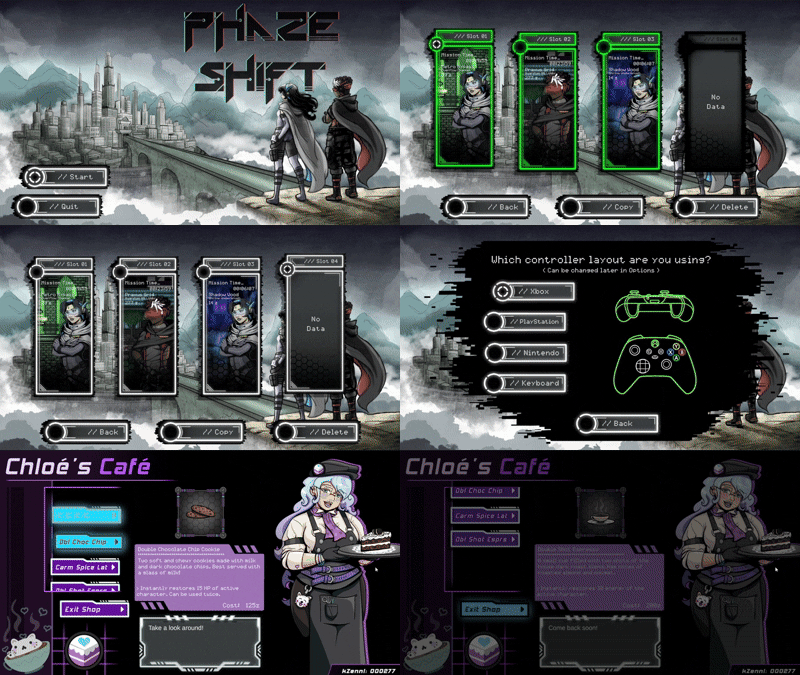
The UI is consistent across shops and NPCs, but I made sure to give the NPCs their own color schemes and flair. I took care to make the main menu of the game unique, yet still carry the same overall theme. The save slots display relevant data and have unique images that showcase a preview of the last area the player saved in.
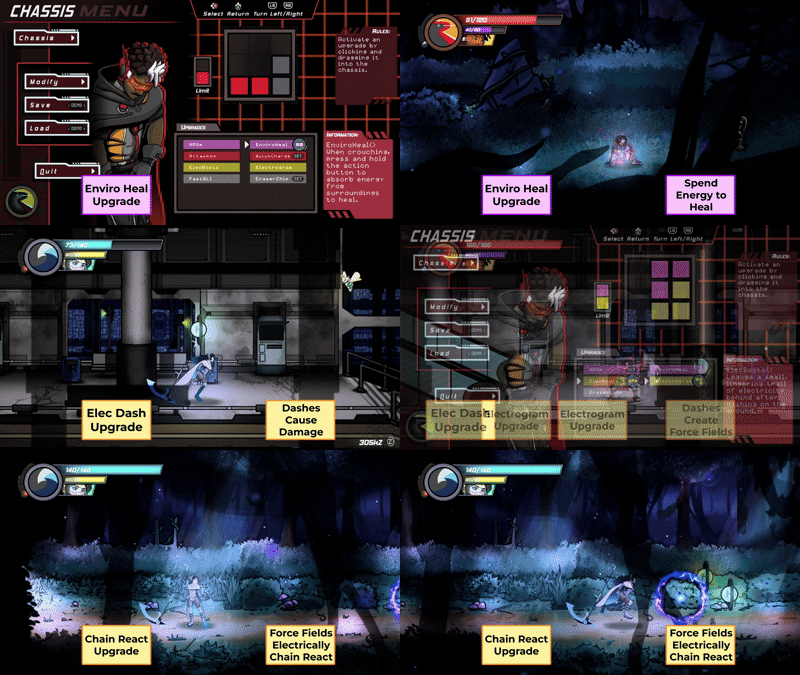
The game features a customizable upgrade system where players install modifications into their "chassis." From stat boosts to new abilities, upgrades can be equipped and fused together to create unique power combinations. The demo includes 12 optional upgrades to discover.
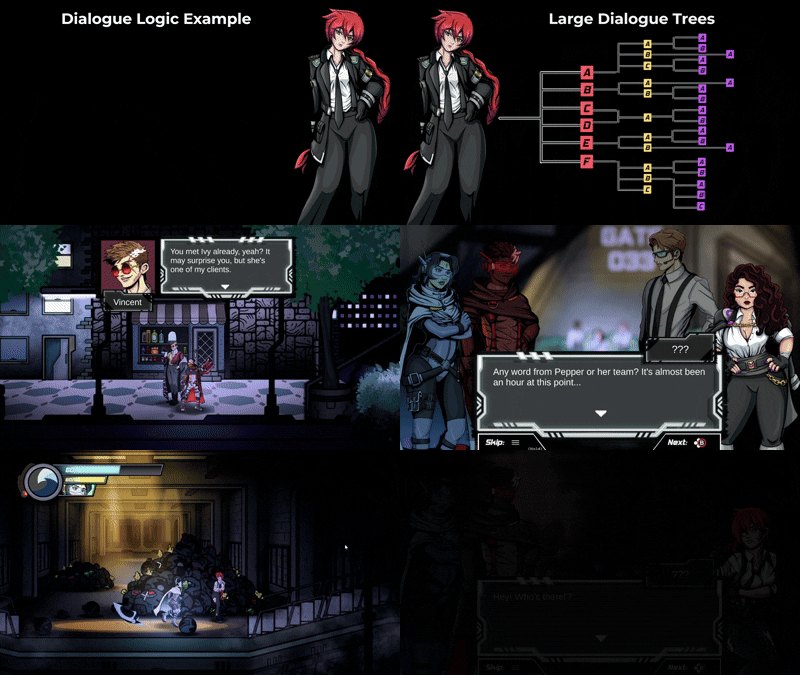
I implemented a dynamic, context-aware dialogue system with 80+ branching nodes that track player progression, sequence breaks, equipped upgrades, and the order in which characters are encountered. Dialogue adapts intelligently to how each player experiences the game.
Additional systems featured in the demo include: a complete save file manager (create/copy/delete functionality), a dynamic map that fills as players explore, sequence break paths allowing players to skip bosses or entire areas, 3 unique boss encounters, 2 challenge rooms and a weapon-switching mechanic.
Game Engine: Unity (C#)
2D Art: Photoshop, Krita, Procreate, GIMP (portrait art, concept art, sprite work)
3D Art: Blender (sculpting, rendering, sprite work)
Design: Figma (web/UI design)
This project taught me that great games emerge from a deep passion for the craft, a strong drive to push quality content, continuously iterating on game feel, and responding to player feedback. These are the skills I'm excited to bring to a collaborative team environment where I can contribute across art, engineering, and design.
If you'd like to see the GitHub repo for my website, the link is below:
https://github.com/MegaMang0/phaze-shift-site